
MonkSugar vs Dates (Khajoor)
Dates are a nutrient-dense whole food — but are they a good sugar substitute for daily use? Here's the comparison.
Our Verdict
Different use cases — MonkSugar for daily sweetening, dates for occasional nutrition
Dates are a genuine whole food with fiber, minerals, and antioxidants — they're not just sugar in fruit form. However, they are NOT a practical daily sugar substitute: they still raise blood sugar (GI 42), have significant calories, and are impossible to measure accurately for chai or recipes. MonkSugar is the daily sweetener; dates are an occasional nutritious treat.
Detailed Breakdown
Blood Sugar Impact
MonkSugar wins. GI of 0 vs dates' 42. Dates are better than sugar but still raise blood sugar.
Calories
MonkSugar wins. Zero calories vs ~20 calories per date.
Taste & Aftertaste
Different categories. Dates have rich, complex fruit sweetness. MonkSugar has clean sugar sweetness. Not really comparable.
Cooking & Baking
MonkSugar wins for versatility. Dates work in energy balls and smoothies but can't replace sugar in chai, baking, or most Indian recipes.
Safety & Health
MonkSugar wins for diabetics. Dates still raise blood sugar and are not recommended as a daily sweetener for diabetics.
Value for Money
Dates provide genuine nutrition (fiber, minerals). MonkSugar provides zero-sugar sweetening. They serve different purposes.
Pros & Cons at a Glance
MonkSugar
100% Natural (Monk Fruit + Allulose)
Pros
- ✓Zero glycemic index — no blood sugar spike at all
- ✓Zero calories, zero carbs
- ✓Tastes like real sugar — no aftertaste
- ✓1:1 sugar replacement — no conversion math
- ✓Heat stable — works in cooking & baking up to 200°C+
- ✓Natural antioxidants (mogrosides)
- ✓FSSAI certified, FDA GRAS approved
- ✓Vegan, keto, and diabetic safe
Cons
- ✗Higher price than refined sugar
- ✗Not available offline in most cities yet
Dates (Khajoor)
Natural (date palm fruit)
Pros
- ✓Rich in fiber, potassium, magnesium, iron
- ✓Contains natural antioxidants
- ✓Lower GI than sugar (42 vs 65)
- ✓Whole food — not processed
- ✓Cultural and religious significance
Cons
- ✗GI of 42 — still raises blood sugar (not safe for diabetics as sweetener)
- ✗High in calories and natural sugars
- ✗Hard to measure precisely in recipes
- ✗Not a 1:1 sugar replacement
- ✗Adds volume, texture, and colour to recipes
- ✗Expensive for premium varieties
Frequently Asked Questions
In moderation (1-2 dates), dates are manageable for some diabetics due to their fiber content which slows sugar absorption. But using dates as a daily sugar substitute is not recommended — GI of 42 and significant calorie content. MonkSugar is safer for daily sweetening.
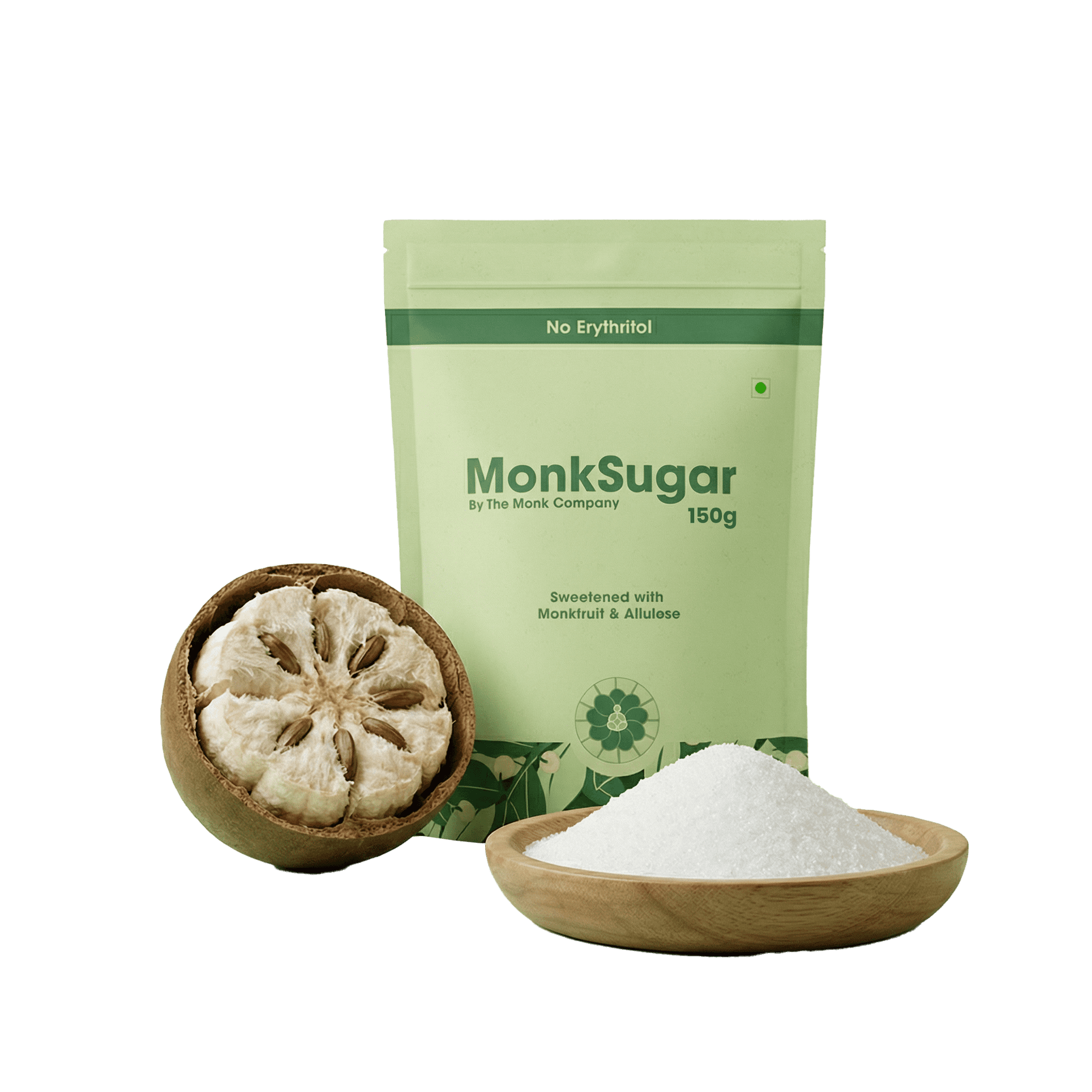
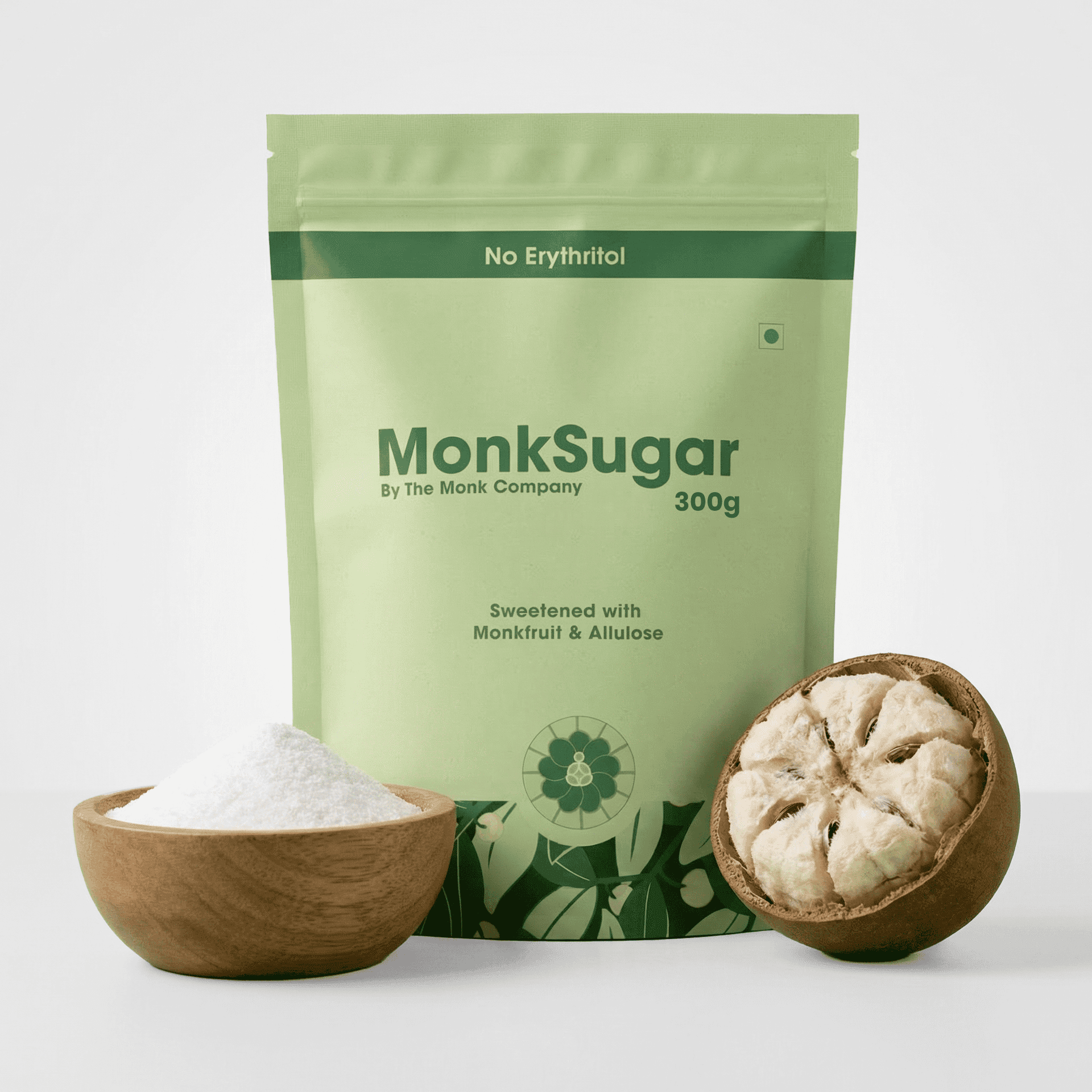
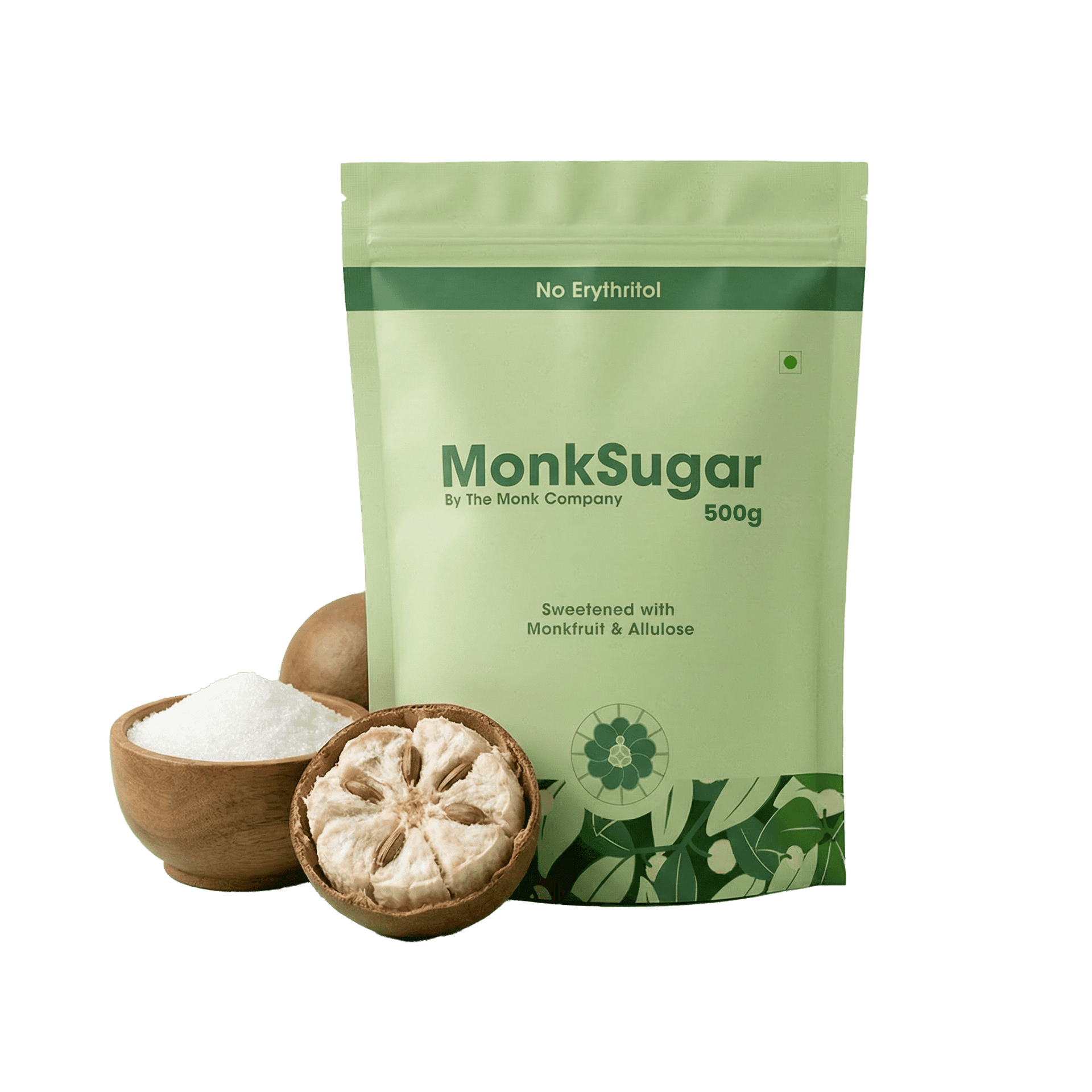
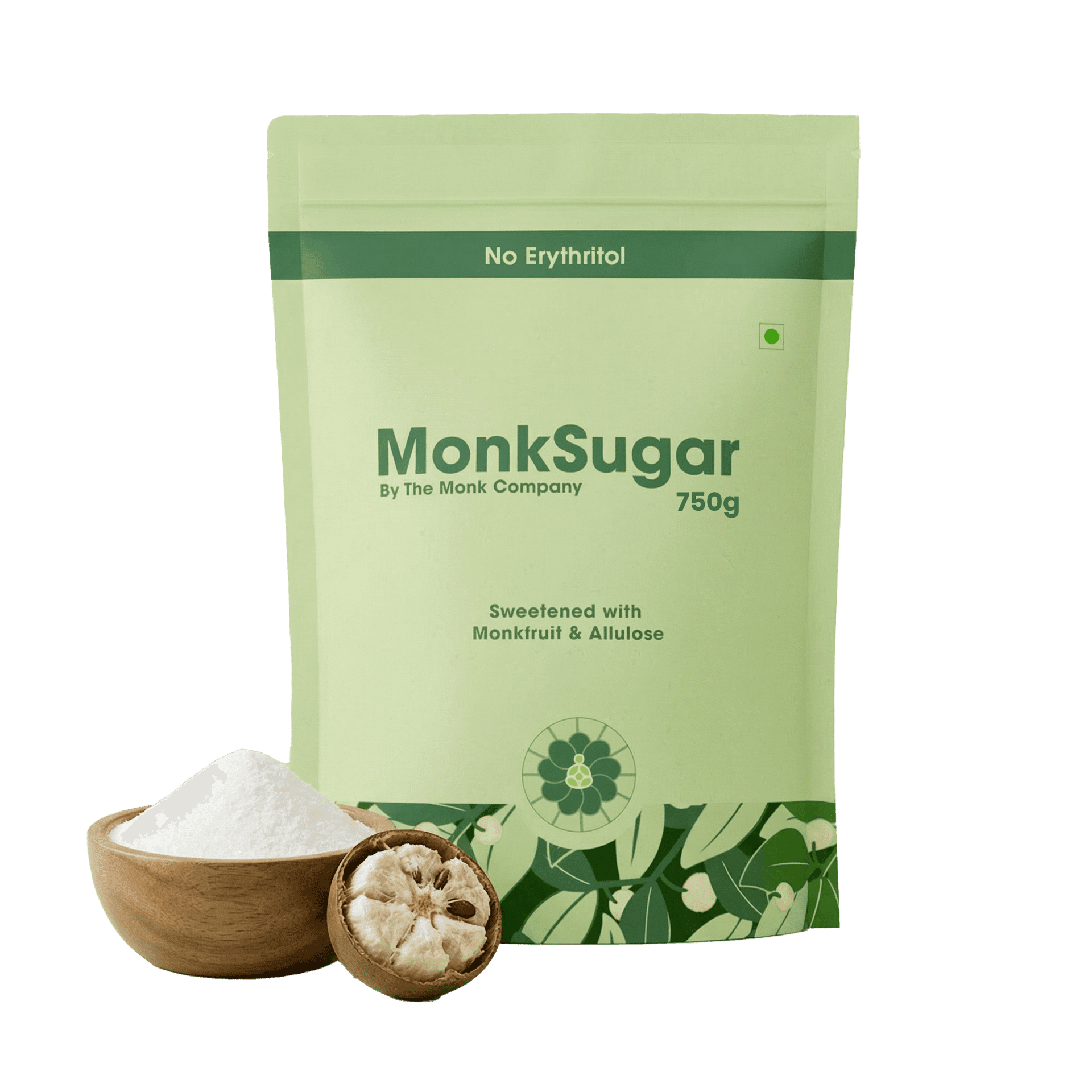
.png&w=1920&q=75&dpl=dpl_B3LzNjVkhMqsgi6YT9Vg6jfZKEJs)
More Sweetener Comparisons
MonkSugar vs Stevia
MonkSugar wins for taste and ease of use
MonkSugar vs Sugar Free (Aspartame)
MonkSugar wins — natural, tastier, and cooks better
MonkSugar vs Jaggery (Gur)
MonkSugar wins for health; jaggery wins for traditional flavour
MonkSugar vs Honey
MonkSugar for daily sweetening; honey for occasional therapeutic use