
MonkSugar vs Honey
Honey is revered in Ayurveda and Indian households. But is it safe for daily use, especially for diabetics? Here's MonkSugar vs honey — the real picture.
Our Verdict
MonkSugar for daily sweetening; honey for occasional therapeutic use
Honey has genuine health benefits — enzymes, antioxidants, antibacterial properties — but it is NOT a safe daily sweetener for diabetics (GI 58, 21 cal/tsp). It also loses its beneficial enzymes when heated above 40°C, making it unsuitable for chai or cooking. MonkSugar is the better daily sweetener for anyone watching calories or blood sugar, while honey can be used occasionally for its therapeutic properties.
Detailed Breakdown
Blood Sugar Impact
MonkSugar wins. GI of 0 vs honey's 58. Honey still raises blood sugar, just less than table sugar.
Calories
MonkSugar wins. Zero calories vs honey's 21 calories per teaspoon.
Taste & Aftertaste
Different profiles — honey has a distinctive floral flavour, MonkSugar tastes like clean sugar. Neither is "better"; depends on the use.
Cooking & Baking
MonkSugar wins for hot applications. Heating honey above 40°C destroys its beneficial enzymes (an Ayurvedic principle too). MonkSugar is stable up to 200°C+.
Safety & Health
MonkSugar wins for diabetics. Honey raises blood sugar and is not recommended for regular diabetic use. Honey also has a major adulteration problem in India.
Value for Money
Honey is more expensive than sugar but provides some nutrients. MonkSugar is more expensive but provides zero-sugar, zero-calorie sweetening for daily use.
Pros & Cons at a Glance
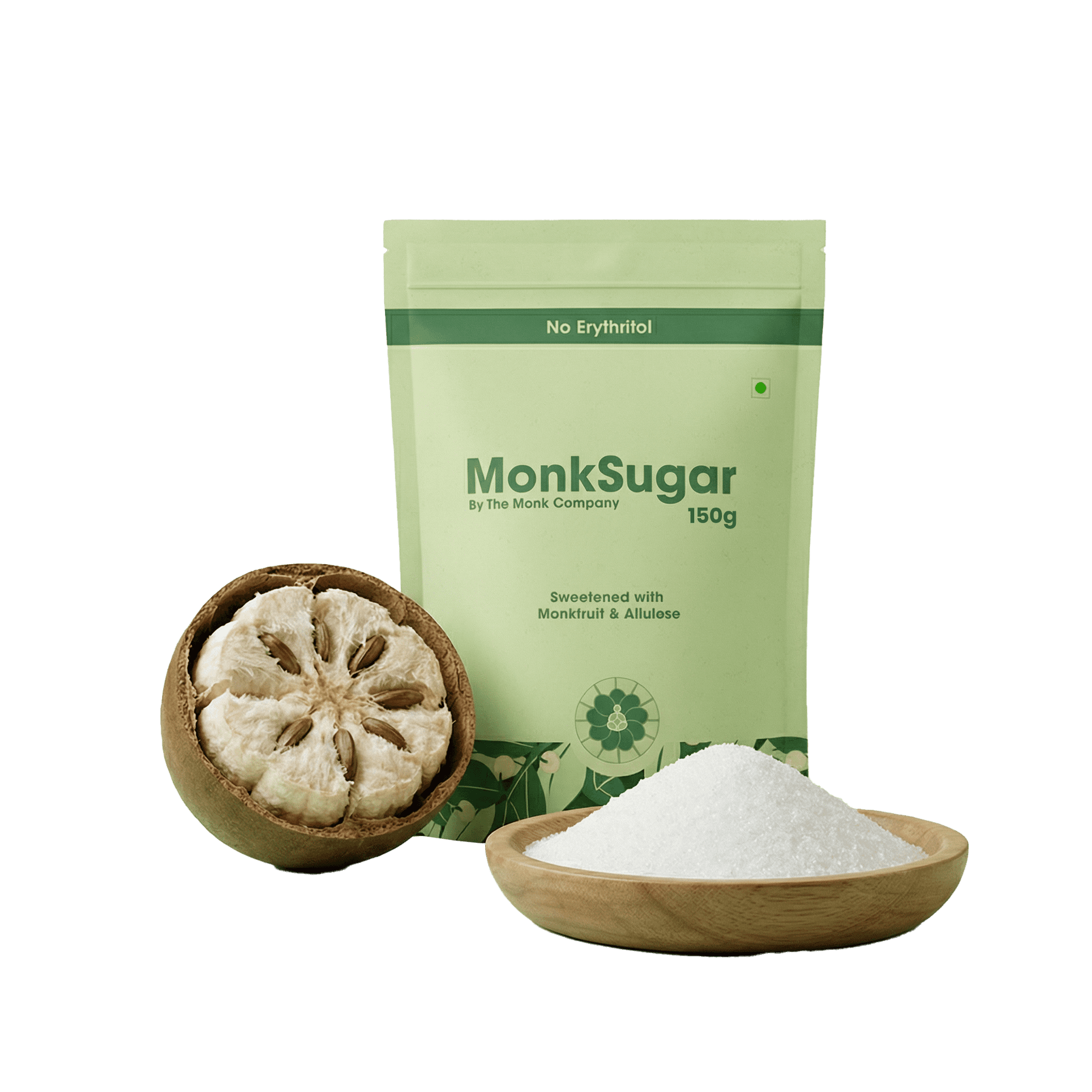
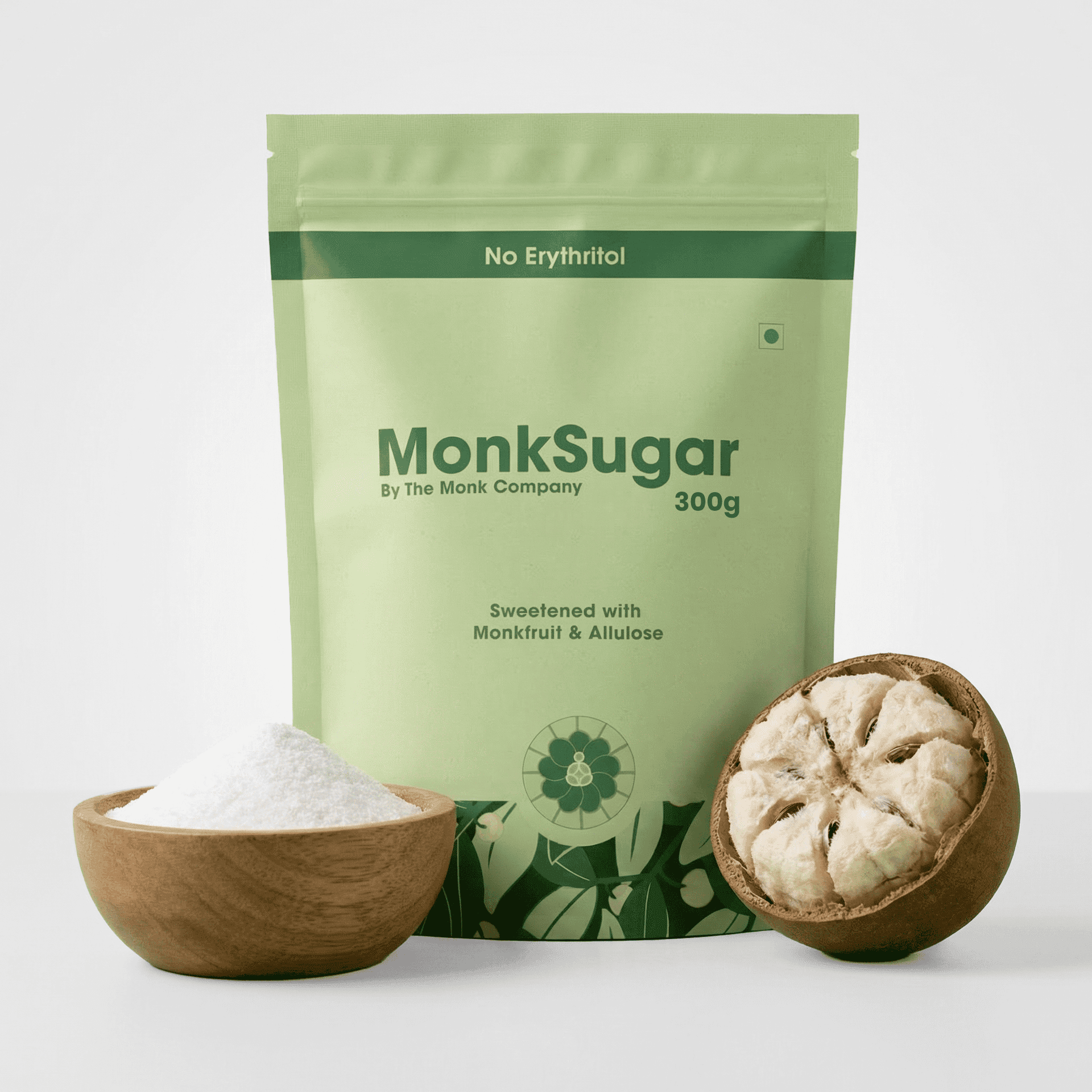
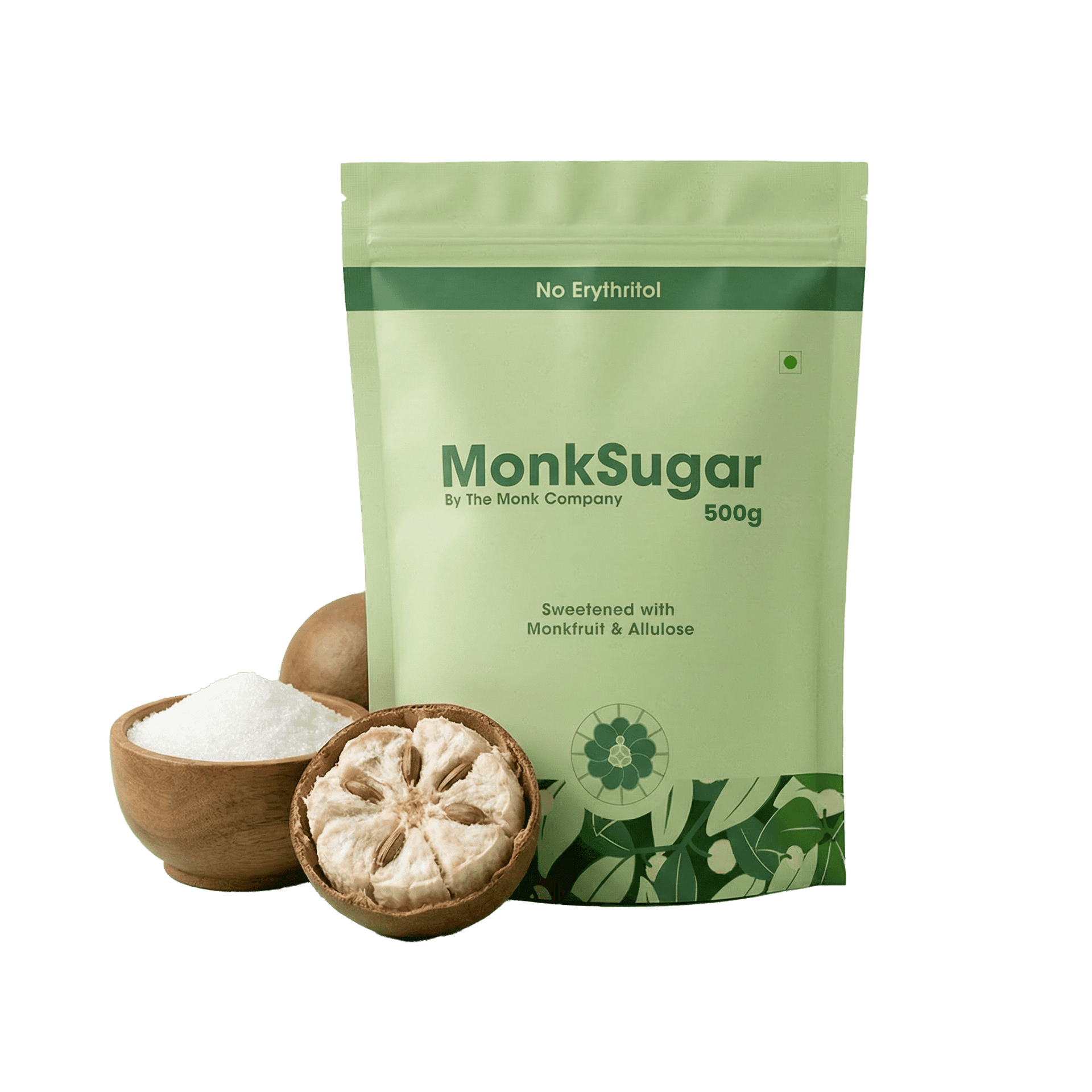
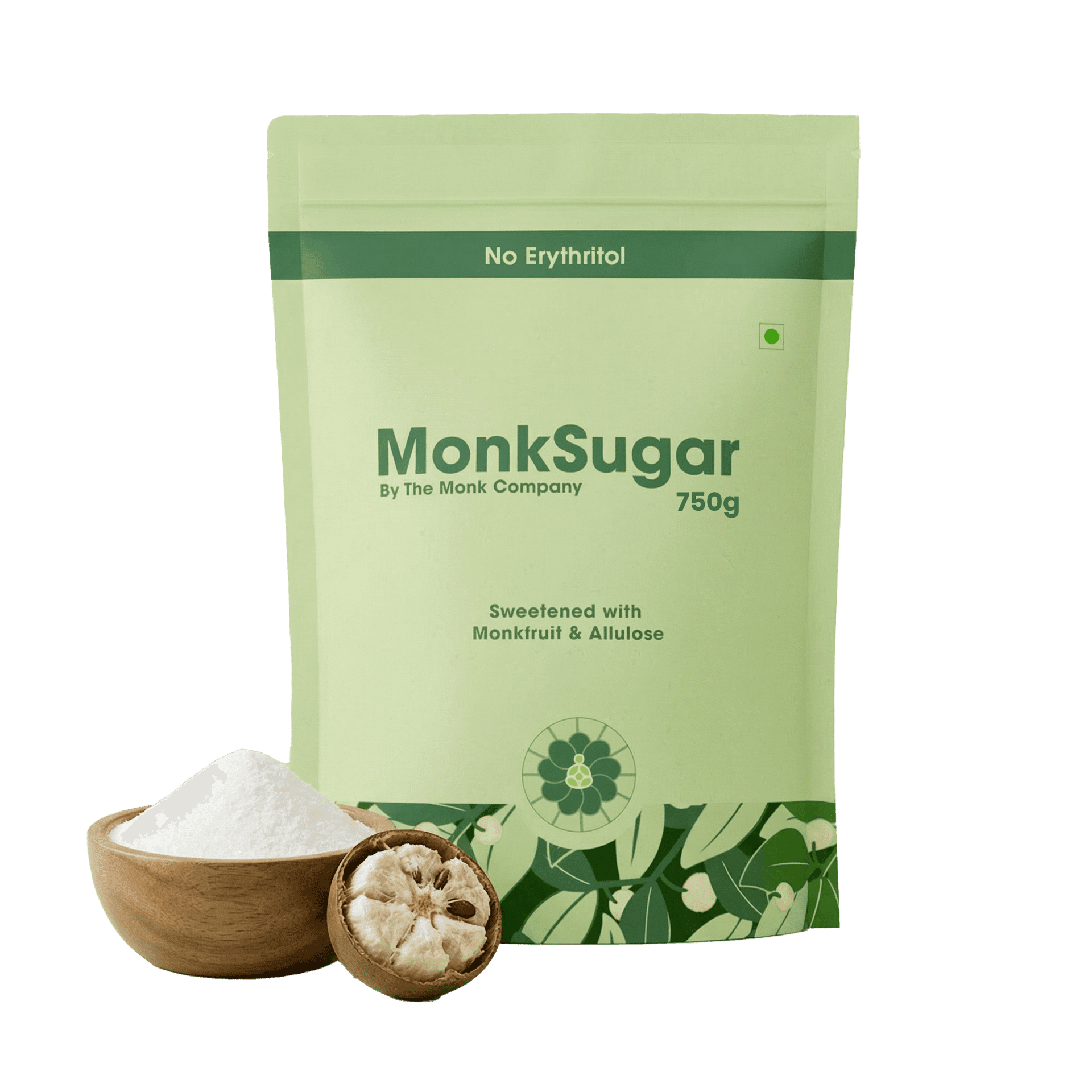
MonkSugar
100% Natural (Monk Fruit + Allulose)
Pros
- ✓Zero glycemic index — no blood sugar spike at all
- ✓Zero calories, zero carbs
- ✓Tastes like real sugar — no aftertaste
- ✓1:1 sugar replacement — no conversion math
- ✓Heat stable — works in cooking & baking up to 200°C+
- ✓Natural antioxidants (mogrosides)
- ✓FSSAI certified, FDA GRAS approved
- ✓Vegan, keto, and diabetic safe
Cons
- ✗Higher price than refined sugar
- ✗Not available offline in most cities yet
Honey
Natural (bee-produced)
Pros
- ✓Rich in natural enzymes and antioxidants
- ✓Antibacterial and antimicrobial properties
- ✓Pleasant, complex floral flavour
- ✓Ayurvedic and traditional medicine applications
- ✓Contains trace vitamins and minerals
Cons
- ✗Glycemic index of 58 — still raises blood sugar
- ✗21 calories per teaspoon
- ✗Not safe for diabetics as daily sweetener
- ✗Loses beneficial enzymes when heated above 40°C
- ✗Rampant adulteration in Indian market
- ✗Not keto-friendly due to fructose content
Frequently Asked Questions
Honey has a glycemic index of 58 and 21 calories per teaspoon. While lower than sugar (GI 65), it still raises blood sugar and is not recommended as a daily sweetener for diabetics. MonkSugar (GI 0) is the safer daily choice.
.png&w=1920&q=75&dpl=dpl_B3LzNjVkhMqsgi6YT9Vg6jfZKEJs)
More Sweetener Comparisons
MonkSugar vs Stevia
MonkSugar wins for taste and ease of use
MonkSugar vs Sugar Free (Aspartame)
MonkSugar wins — natural, tastier, and cooks better
MonkSugar vs Jaggery (Gur)
MonkSugar wins for health; jaggery wins for traditional flavour
MonkSugar vs Sucralose (Splenda)
MonkSugar wins — truly natural vs chemically modified sugar