
MonkSugar vs Sugar Free (Aspartame)
Sugar Free tablets are India's most popular artificial sweetener. MonkSugar offers a 100% natural alternative. Here's how they compare.
Our Verdict
MonkSugar wins — natural, tastier, and cooks better
Sugar Free (aspartame) is affordable and convenient, but it's an artificial chemical sweetener that cannot be used for cooking and has a metallic aftertaste. MonkSugar is 100% natural, tastes like real sugar, and works perfectly in cooking and baking. The WHO's 2023 classification of aspartame as "possibly carcinogenic" has also made many health-conscious Indians look for natural alternatives.
Detailed Breakdown
Blood Sugar Impact
Tie — both have zero/near-zero impact on blood sugar levels.
Calories
Tie — both are effectively zero-calorie sweeteners.
Taste & Aftertaste
MonkSugar wins. Clean, sugar-like sweetness vs aspartame's metallic/chemical notes. In chai, the difference is immediately noticeable.
Cooking & Baking
MonkSugar wins decisively. Aspartame breaks down at high temperatures, so Sugar Free cannot be used for cooking, baking, or making Indian sweets. MonkSugar is heat stable up to 200°C+.
Safety & Health
MonkSugar wins. It's 100% natural (plant-based). Aspartame is a synthetic chemical classified as "possibly carcinogenic" (Group 2B) by WHO/IARC in 2023.
Value for Money
Sugar Free is cheaper, but you cannot cook with it. MonkSugar replaces both your chai sweetener AND cooking sugar in one product.
Pros & Cons at a Glance
MonkSugar
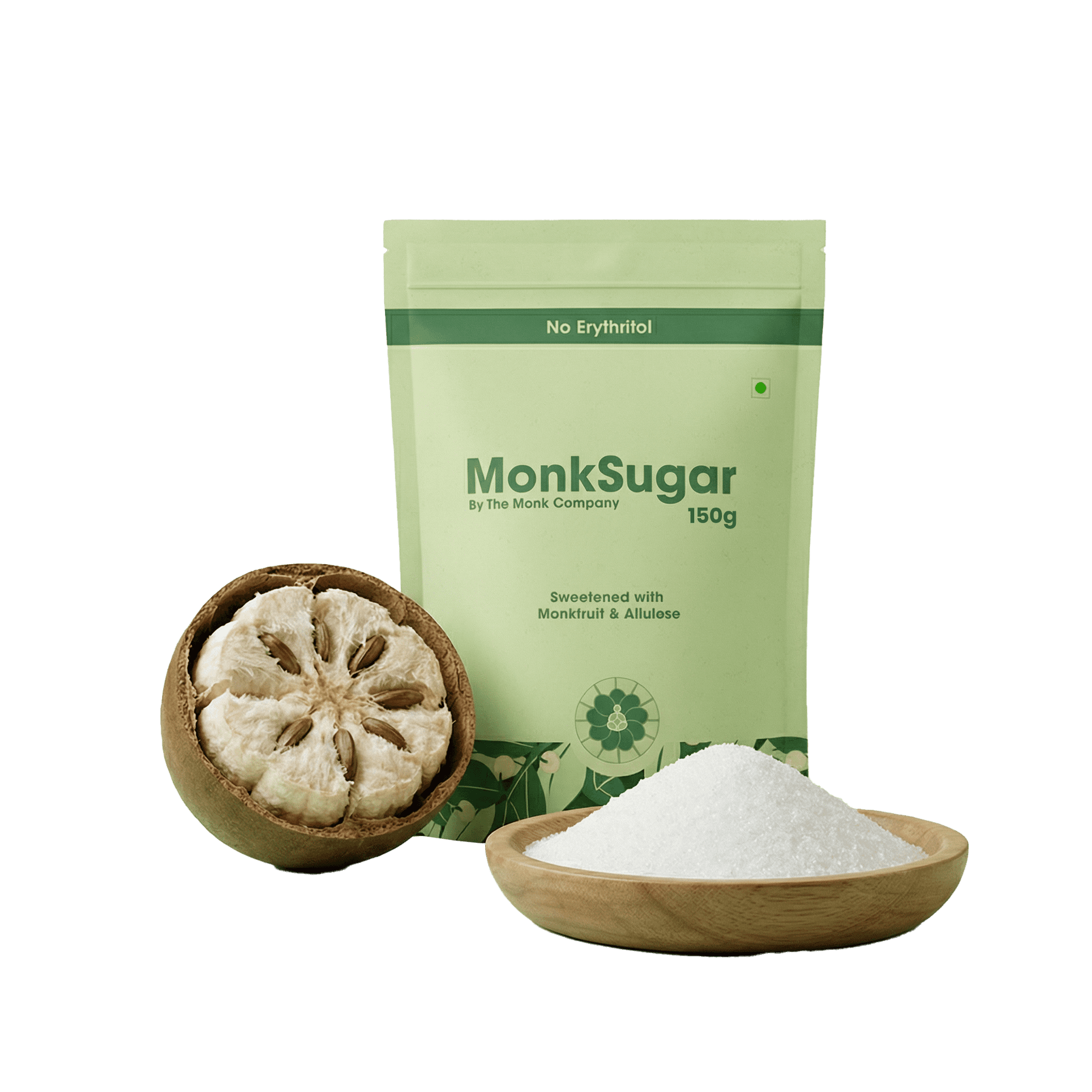
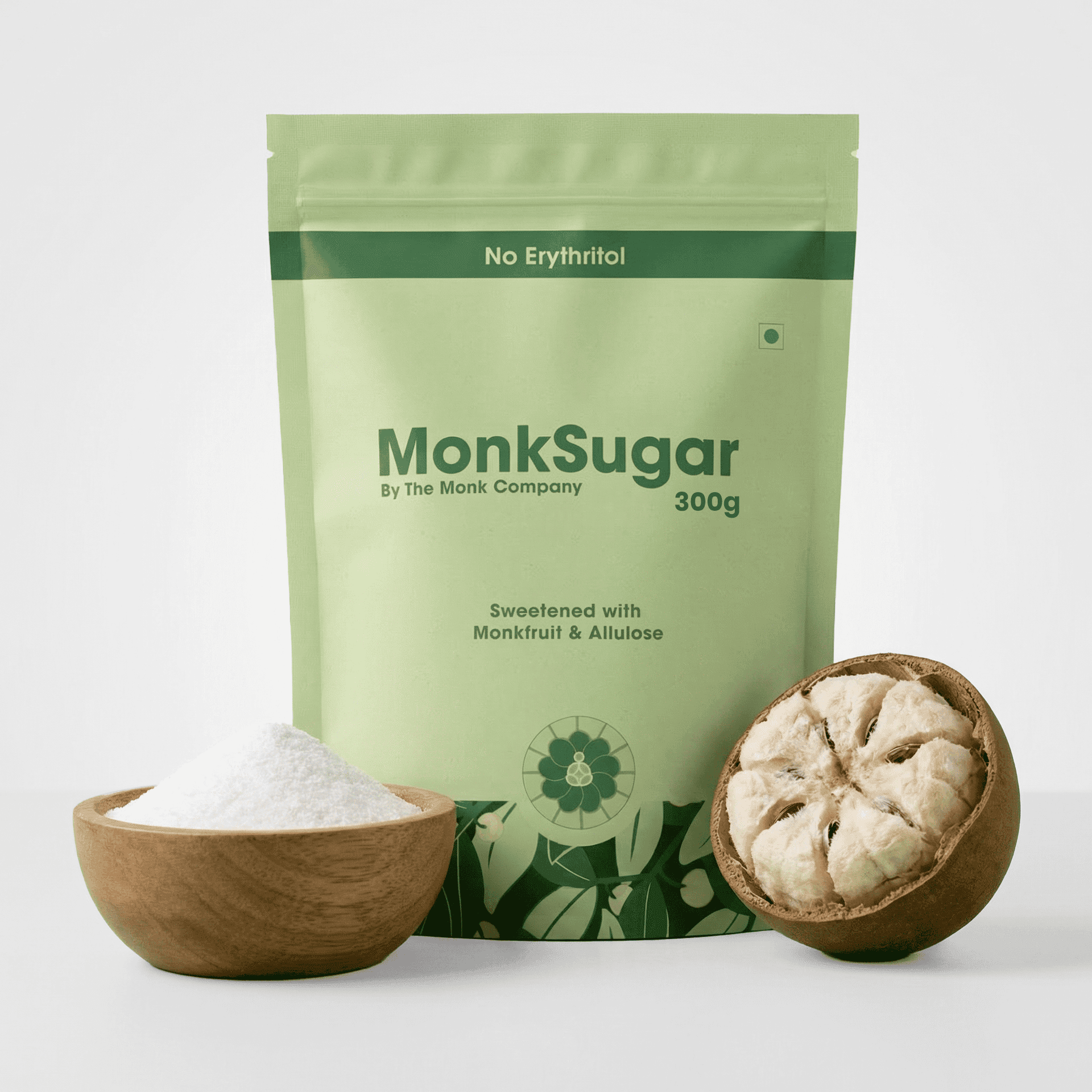
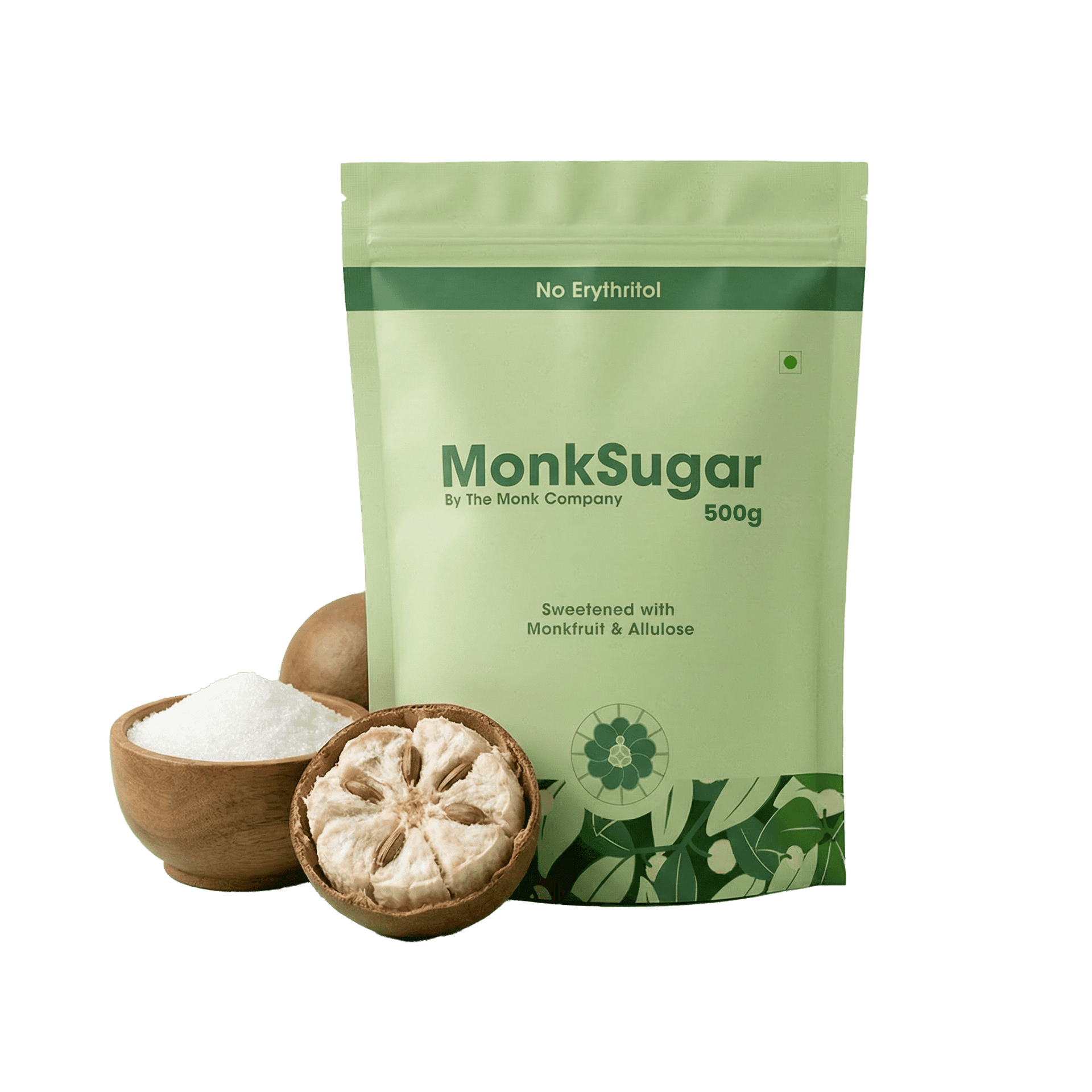
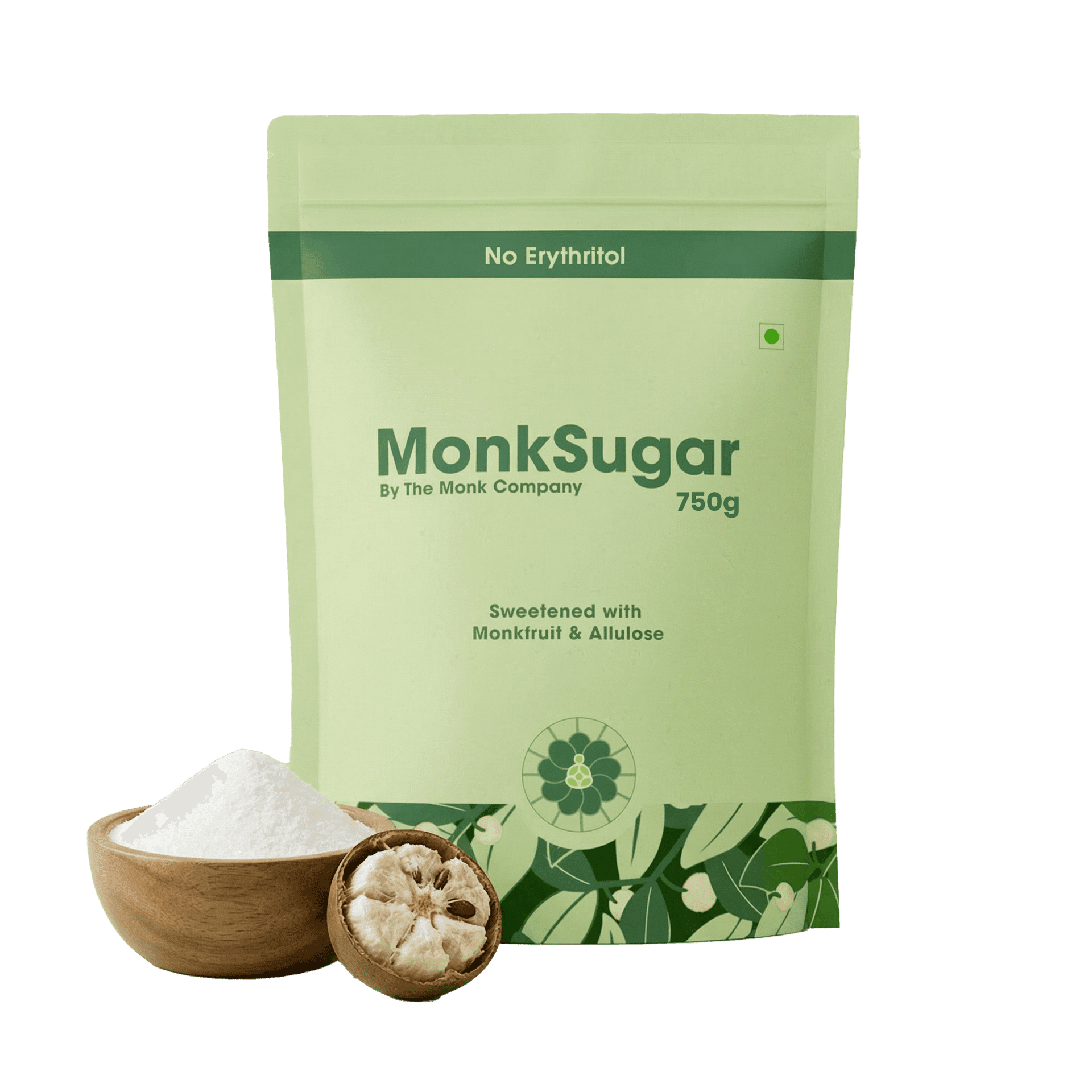
100% Natural (Monk Fruit + Allulose)
Pros
- ✓Zero glycemic index — no blood sugar spike at all
- ✓Zero calories, zero carbs
- ✓Tastes like real sugar — no aftertaste
- ✓1:1 sugar replacement — no conversion math
- ✓Heat stable — works in cooking & baking up to 200°C+
- ✓Natural antioxidants (mogrosides)
- ✓FSSAI certified, FDA GRAS approved
- ✓Vegan, keto, and diabetic safe
Cons
- ✗Higher price than refined sugar
- ✗Not available offline in most cities yet
Sugar Free (Aspartame)
Artificial (synthetic chemical)
Pros
- ✓Very affordable and widely available
- ✓Practically zero calories
- ✓Dissolves quickly in hot drinks
- ✓Available in tablet form — convenient for carrying
- ✓Long shelf life
Cons
- ✗Artificial — made from synthetic aspartame
- ✗Metallic/chemical aftertaste
- ✗Breaks down at high temperatures — NOT for cooking or baking
- ✗Linked to gut microbiome disruption in studies
- ✗WHO classified aspartame as "possibly carcinogenic" (Group 2B) in 2023
- ✗Not a 1:1 replacement — tiny tablets, hard to dose for recipes
Frequently Asked Questions
In 2023, WHO/IARC classified aspartame as "possibly carcinogenic to humans" (Group 2B). While regulatory agencies still consider it safe within daily limits, many health-conscious consumers are switching to natural alternatives like monk fruit.
.png&w=1920&q=75&dpl=dpl_B3LzNjVkhMqsgi6YT9Vg6jfZKEJs)
More Sweetener Comparisons
MonkSugar vs Stevia
MonkSugar wins for taste and ease of use
MonkSugar vs Jaggery (Gur)
MonkSugar wins for health; jaggery wins for traditional flavour
MonkSugar vs Honey
MonkSugar for daily sweetening; honey for occasional therapeutic use
MonkSugar vs Sucralose (Splenda)
MonkSugar wins — truly natural vs chemically modified sugar