Gut Health and Blood Sugar: The Microbiome Connection Hiding in Your Digestion
Trillions of microbes living in your gut help decide how your body handles a meal. Feeding them well, mostly with fibre and fermented foods, turns out to be quiet blood-sugar management.
There is an entire ecosystem living inside you. Your gut is home to trillions of bacteria, collectively called the microbiome, and in the last decade science has realised these microbes are not just passengers. They are active participants in your metabolism, and they have a surprising amount to say about how your body handles blood sugar. Two people can eat the identical meal and see different glucose responses, and part of that difference lives in the gut.
The best part of this story is how practical it turns out to be. You cannot micromanage trillions of bacteria, but you can feed them well, and in India the traditional kitchen already knows how.

What the microbiome does with your food
Much of what you eat is digested and absorbed high up in your gut. But some of it, particularly certain fibres, passes through undigested and arrives in the large intestine, where your bacteria are waiting. There, the microbes ferment that fibre, and in doing so they produce remarkable compounds called short-chain fatty acids, the best known of which is butyrate.
These short-chain fatty acids are far more than waste. They nourish the cells lining your gut, help keep the gut barrier intact, and, crucially for blood sugar, they trigger the release of gut hormones like GLP-1 and PYY. These are the same hormones that improve insulin release, steady glucose metabolism and signal fullness. In other words, feeding your gut bacteria the right fibre sets off a chain of events that helps regulate your blood sugar from the inside.
Why fibre is the star
This is the deeper reason fibre matters so much. Beyond the gel that viscous fibre forms to slow sugar absorption, fermentable fibres act as food for your microbiome, feeding the very bacteria that produce those helpful short-chain fatty acids. A diet rich in diverse plant fibres tends to grow a more diverse, more butyrate-producing community of gut bacteria, and studies show that high-fibre diets improve glucose control in people with type 2 diabetes partly through this route.
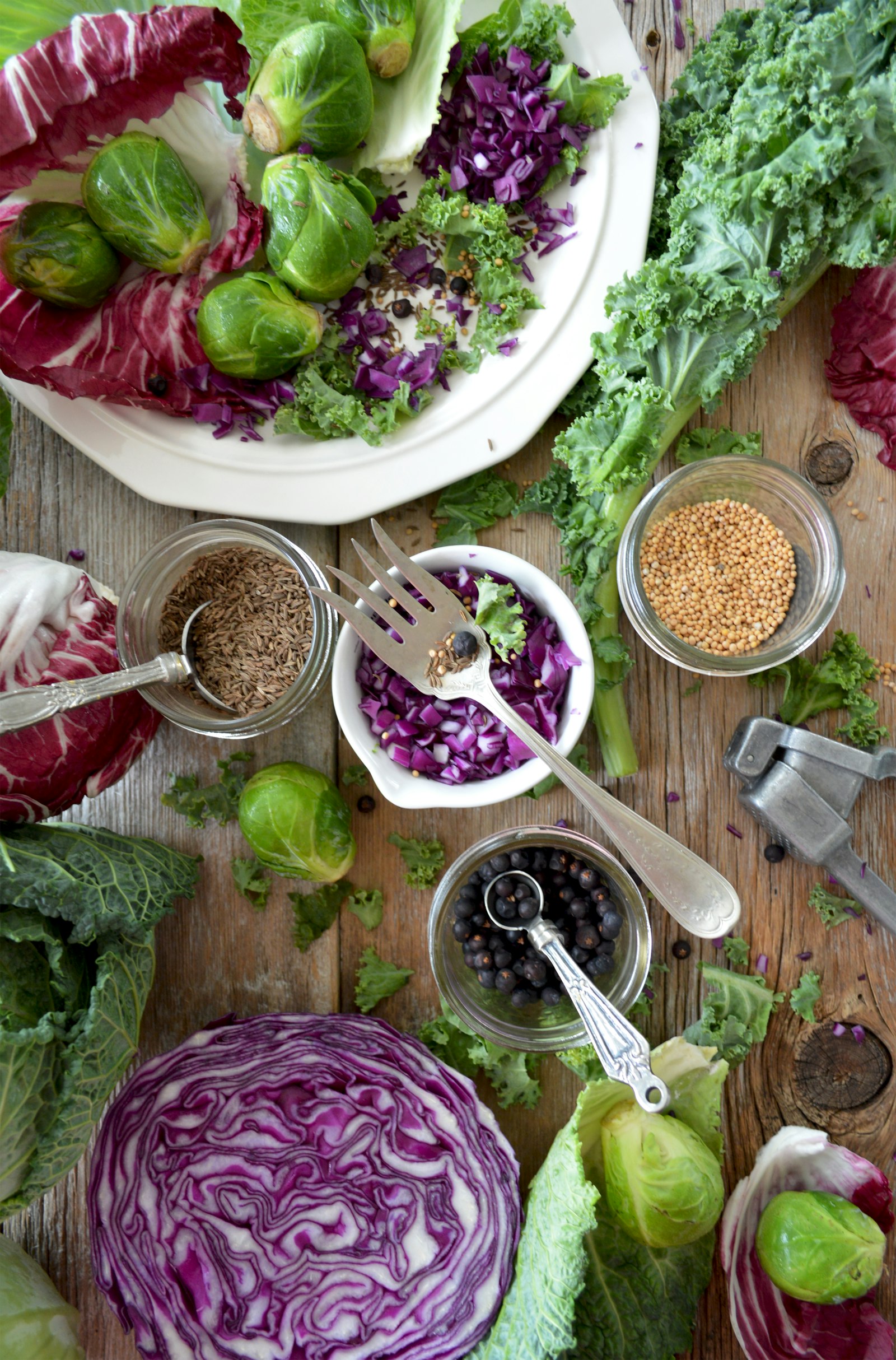
The practical translation is simple and familiar: variety of plants. Different fibres feed different microbes, so a plate that rotates through pulses, whole grains, vegetables, fruit, nuts and seeds does more for your gut than any single "superfood." An Indian thali, at its traditional best, is a remarkably good microbiome meal, dal, sabzi, whole grains and a little curd all in one.
The fermented foods advantage
India has a long, quiet head start here. Traditional fermented foods, dahi and buttermilk, idli and dosa made from naturally fermented batter, kanji, and many regional pickles, deliver live beneficial microbes and the by-products of fermentation to your gut. Fermentation also pre-digests some of the food, and in the case of dahi over milk, tends to produce a gentler blood-sugar response.
Modern research has taken an interest in exactly this. Diets richer in fermented foods have been associated with greater microbial diversity and lower markers of inflammation, both relevant to metabolic health. You do not need exotic imports to benefit; a bowl of home-set dahi, a glass of chaas, or idli for breakfast are time-tested, everyday versions of what the wellness world now sells as "probiotic."
How to look after your gut, and your blood sugar
You do not need supplements or complicated protocols. The microbiome responds to the overall pattern of what you eat:
- Eat a wide variety of plants. Aim for many different vegetables, pulses, whole grains, fruits, nuts and seeds across the week. Diversity on the plate builds diversity in the gut.
- Make fibre a daily habit. Whole pulses, millets, vegetables and fruit with their skins feed the bacteria that help your blood sugar.
- Include fermented foods regularly. Home-set dahi, chaas, idli and dosa are easy, traditional sources of beneficial microbes.
- Go easy on the ultra-processed. Diets heavy in refined, low-fibre, high-sugar packaged food tend to feed a less helpful microbial community.
- Give it time. The gut community shifts over weeks of consistent eating, not overnight. Steady habits are what reshape it.
It is a genuinely hopeful idea: that tending an invisible garden inside you, mostly by eating more plants and a little fermented food, quietly improves how your whole body handles sugar. The Indian kitchen has been doing this for centuries without the vocabulary. The science has simply caught up to the wisdom, and put a mechanism behind the meal.
References & further reading
- Dietary fibre and the gut microbiome: implications for glucose homeostasis (PubMed Central). PubMed Central
- Gut microbiota and short-chain fatty acids: implications in glucose homeostasis (PubMed Central). PubMed Central
- ICMR-National Institute of Nutrition. Dietary Guidelines for Indians, 2024. icmr.nic.in (PDF)
This article is for educational purposes only and does not constitute medical advice. Please consult a qualified doctor or dietitian before making changes to your diet, exercise, or medication. Data cited is the most recent available at the time of writing.